🕒 4 min read
The European Space Agency (ESA) launched its largest interplanetary probe to date, the Jupiter Icy Moons Explorer (JUICE), in April 2023. The mission, which is expected to arrive at Jupiter in 2031, will spend four years studying the planet and its Galilean moons before concluding with an orbital phase and final impact on Ganymede. This article outlines the spacecraft’s design and the challenges it faces in exploring one of the most extreme environments in the solar system.
Engineering a Spacecraft for Jupiter’s Harsh Environment

The JUICE mission is driven by the need to survive and operate in the extreme conditions near Jupiter. Researchers at ESA said the spacecraft must endure temperatures as low as −220 °C while orbiting the gas giant and withstand intense solar radiation during its interplanetary journey. The mission’s design also includes provisions for planetary protection, ensuring that the probability of contaminating Europa—Jupiter’s moon considered a potential habitat for life—remains below 10−4.
Key Design Challenges and Solutions
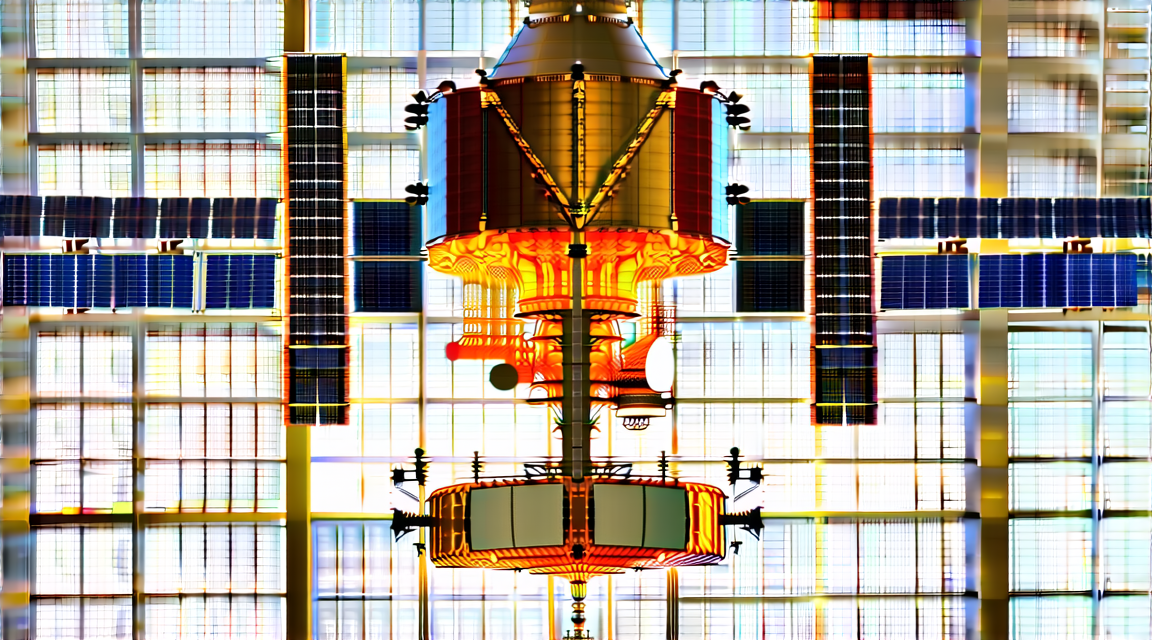
The spacecraft’s design is shaped by several critical challenges. The vast distance from the Sun necessitates a large solar array, with 85 m² of customized LILT (Low Intensity Low Temperature) solar cells to generate power. These cells are essential for maintaining operations in the low solar flux environment near Jupiter, which is about 50 W/m². The thermal control system uses multi-layer insulation and a high-gain antenna painted with special white paint to shield sensitive components from extreme temperatures.
Another major challenge is the intense radiation environment near Jupiter. The planet’s magnetic field, 20 times stronger than Earth’s, creates dense radiation belts that could damage electronic systems. To address this, the spacecraft incorporates radiation-tolerant components and two dedicated protective vaults made of lead plates. These vaults house critical electronics and are designed to minimize exposure to high-energy particles.
Structural and Mechanical Design
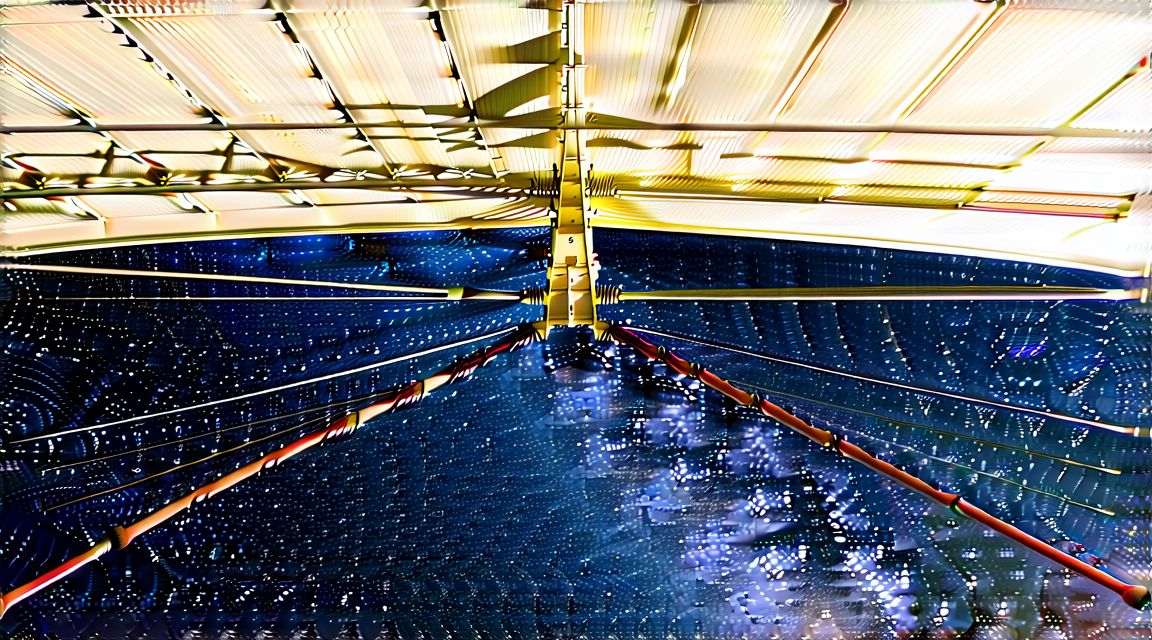
The spacecraft’s structure is centered around two large propellant tanks, which are stacked vertically within a central carbon-fiber-reinforced polymer (CFRP) cylinder. This design allows the spacecraft to carry 3.6 tons of propellant, essential for deep-space maneuvers and orbit insertions at Jupiter and Ganymede. The structure also includes a stable CFRP optical bench to host high-precision instruments like star trackers, which require accurate pointing.
A 10.6-meter deployable boom is used to house the magnetometer, ensuring it operates in a low-magnetic-field environment. This boom separates the sensor from the spacecraft’s body to avoid interference from onboard systems. The spacecraft’s cold side features radiators that are never exposed to direct sunlight, helping manage heat distribution.
Propulsion and Power Systems
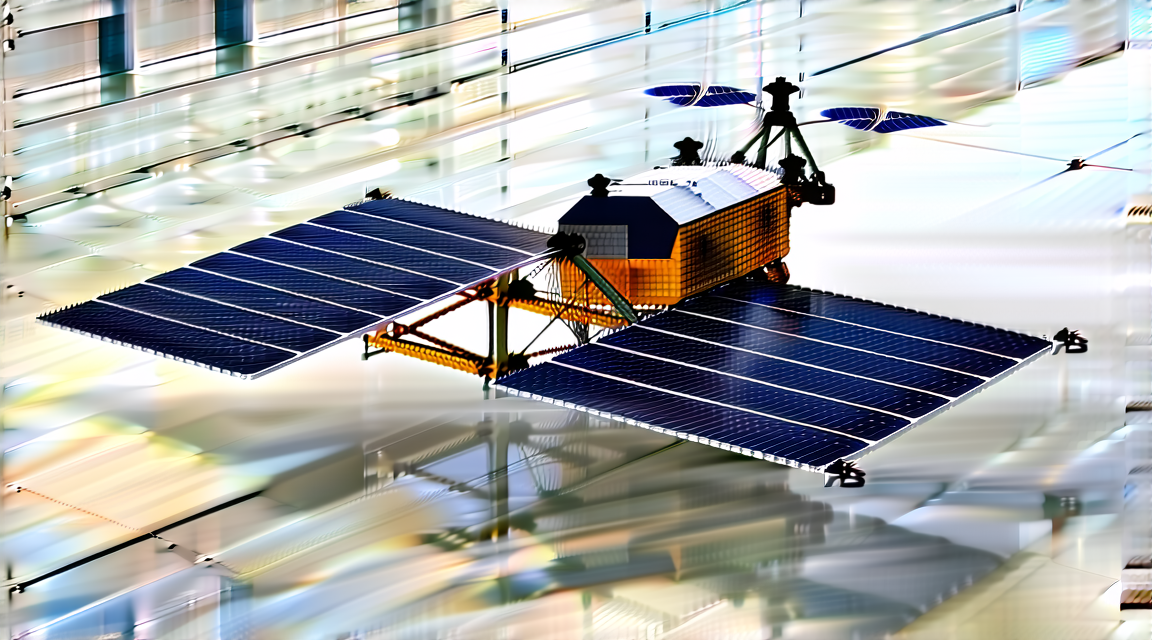
JUICE relies on a bi-propellant propulsion system with two 1630-liter tanks and a main engine producing 425 N of thrust. Additional thrusters—four sets of 20 N and six sets of 10 N—are used for fine adjustments during the mission. The power system includes an 85 m² solar array, which generates 780 W of power at Jupiter, and a 276 Ah lithium-ion battery to support operations during eclipses or low-light conditions.
The spacecraft’s autonomy is a key feature, enabling it to perform complex navigation and scientific observations without constant input from Earth. This is critical given the 1.5-hour signal delay between Jupiter and Earth, which limits real-time control. The mission’s failure detection, isolation, and recovery (FDIR) systems are designed to handle contingencies autonomously, ensuring mission continuity.
Scientific Instruments and Data Handling
JUICE carries 10 instruments, including magnetometers, plasma detectors, and cameras, to study Jupiter’s moons and their environments. The instruments require electromagnetic compatibility, which influenced the design of the solar arrays and other subsystems. For example, surface potential variations on the spacecraft must remain below 1 volt to avoid biasing plasma measurements.
Data handling systems use SpaceWire links for scientific instruments and MIL-STD-1553 buses for platform units. The spacecraft is expected to transmit up to 4 Gb/day of science data from Jupiter, using X-band and Ka-band communications. A 1 Tbit mass memory is embedded in the spacecraft to store data during transmission windows.
What this means / outlook The JUICE mission represents a significant step in understanding Jupiter’s icy moons and their potential to harbor life. The spacecraft’s design addresses the unique challenges of deep-space exploration, from radiation shielding to autonomous operations. As the probe approaches its destination, its findings could provide insights into the formation of the Jovian system and the conditions necessary for life beyond Earth.