
🕒 5 min read
Measuring Newton’s gravitational constant, G, is one of the most enduring challenges in physics. Despite centuries of effort, G remains the least precisely known of the fundamental constants, with recent experiments revealing discrepancies that defy explanation. This article delves into the latest research, exploring how modern metrology, statistical methods, and material science are being deployed to refine G’s value and understand the sources of uncertainty that have long plagued this fundamental measurement.
The Quest for Precision: A Century of Struggle

The measurement of Newton’s gravitational constant, G, has been a cornerstone of physics since its first experimental determination by Henry Cavendish in 1798. Yet, despite over two centuries of refinement, G remains notoriously elusive. Modern experiments, such as those conducted at the Bureau International des Poids et Mesures (BIPM) and the National Institute of Standards and Technology (NIST), continue to grapple with the same fundamental problem: achieving consistent, high-precision results. Recent studies, including work by Schlamminger et al. and Stirling and Schlamminger, have highlighted how even minor variations in experimental setup—such as the influence of time-varying magnetic fields or material anelasticity—can introduce significant errors. These findings underscore the complexity of isolating gravitational forces from other environmental factors, a challenge that has persisted for decades.
The Influence of Environmental Factors
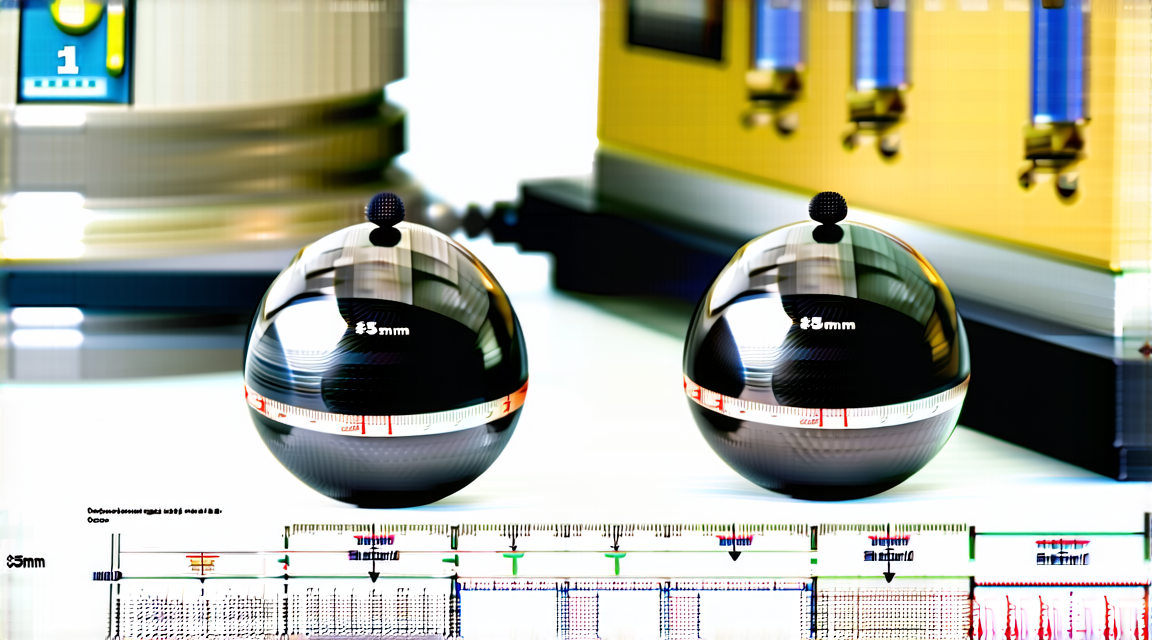
One of the most persistent sources of uncertainty in G measurements stems from environmental variables. For instance, research by Gapinski and Wieczorowski has shown that deviations in the shape of test masses—such as those with three-lobbing imperfections—can distort gravitational readings. Similarly, studies by Waldmann and Speake have demonstrated that inhomogeneities in source masses, whether due to material composition or manufacturing imperfections, can skew results. These issues are compounded by the fact that gravitational forces are inherently weak, making them susceptible to interference from even minute external influences. The challenge, then, is not merely to measure G but to create experimental conditions where gravitational interactions can be observed without contamination from other forces.
Advancements in Metrology and Material Science
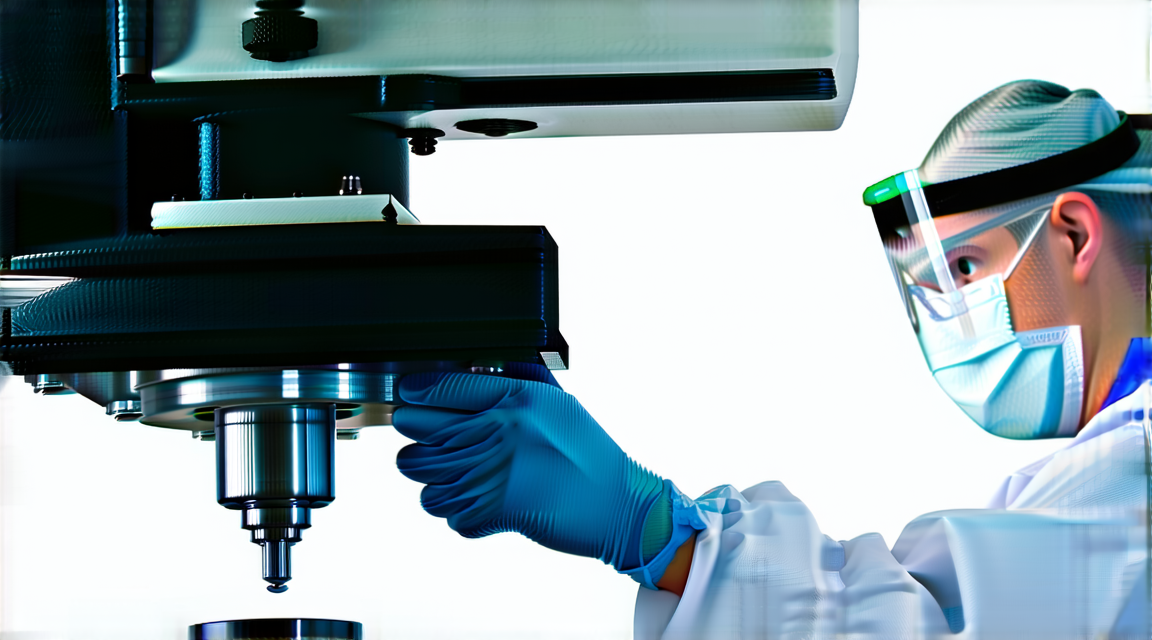
Modern metrology has introduced tools and techniques aimed at mitigating these challenges. The development of highly precise coordinate measuring machines, such as the NIST M48, has allowed researchers to characterize test masses with unprecedented accuracy. Meanwhile, advances in material science have led to the use of ultra-stable materials for constructing torsion balances and other experimental apparatus. Schlamminger’s work on traceable dimensional measurements, for example, has emphasized the importance of minimizing anelastic relaxation in flexure strips used in Kibble balances. These efforts reflect a broader trend toward integrating cutting-edge metrology with rigorous statistical analysis to reduce systematic errors and improve the reliability of G measurements.
The Role of Bayesian Analysis in Uncertainty Quantification
Recent years have seen a growing reliance on Bayesian statistical methods to address the inherent uncertainties in G measurements. Researchers like Rinaldi et al. and Possolo have applied Bayesian frameworks to model and quantify systematic errors, offering a more nuanced understanding of experimental data. This approach allows for the incorporation of prior knowledge and the probabilistic evaluation of uncertainties, which is particularly valuable when dealing with the complex, multi-variable nature of gravitational experiments. For instance, Bayesian methods have been instrumental in reconciling discrepancies between different experimental results, such as those reported in the 2023 study by R S and Quinn T J, which examined the impact of magnetic fields on G determinations.
The Path Forward: Integrating Innovation and Collaboration
As the quest for a more precise value of G continues, the field is increasingly turning to interdisciplinary collaboration. Metrologists, statisticians, and materials scientists are working together to develop new experimental designs that isolate gravitational effects more effectively. For example, the use of advanced autocollimators and angle comparators, as pioneered by Geckeler and colleagues at PTB, has improved the calibration of high-precision instruments. These innovations, combined with the application of robust statistical techniques like those outlined by Huber and Ronchetti, are helping to build a more comprehensive picture of the uncertainties involved in G measurements.
Addressing Systematic Errors Through Automation
A key area of focus for future research is the automation of experimental procedures to reduce human error and variability. The 2024 study by Keck et al. on flexures for Kibble balances, which aims to minimize anelastic relaxation, is a prime example of how automation can enhance measurement consistency. Similarly, efforts to improve the homogeneity of source masses, as outlined in Speake’s 2025 internal report, are being pursued through advanced manufacturing techniques and material characterization. These developments are critical for achieving the level of precision required to resolve the lingering discrepancies in G’s value.
The Importance of Statistical Rigor
Statistical rigor remains central to the refinement of G measurements. The application of methods like the median absolute deviation, as proposed by Rousseeuw and Croux, and the use of dark uncertainty frameworks, as discussed by Thompson and Ellison, are helping researchers better quantify and manage the uncertainties that arise in experimental data. These approaches are particularly relevant in the context of Bayesian analysis, where prior distributions and likelihood functions can be used to model complex error structures. The 2023 paper by Meija et al., which advocates for Bayesian methods in metrology, highlights how these techniques can provide a more transparent and reproducible way of handling uncertainty in G determinations.
Sources
This article was compiled from official announcements by the Bureau International des Poids et Mesures (BIPM), research published in journals such as Metrologia and Phys. Rev. D, and studies conducted at institutions including NIST and PTB. Key contributions were drawn from the work of Schlamminger, Speake, and Keck, as well as statistical methodologies described in publications by Rousseeuw, Possolo, and Meija. The sources include peer-reviewed papers, internal reports, and technical publications from the field of metrology and gravitational physics.
Related reading: For more context, see Einstein Might Be Erasing Entire Worlds: Why Two-Sun Planets Are Missing and How Quantum Computing Will Rewrite Your Wallet's DNA.