
🕒 6 min read
AI Infrastructure and Cloud Wars: The Battle for the Future of Computing
How Cloud Computing Became the Foundation of Artificial Intelligence
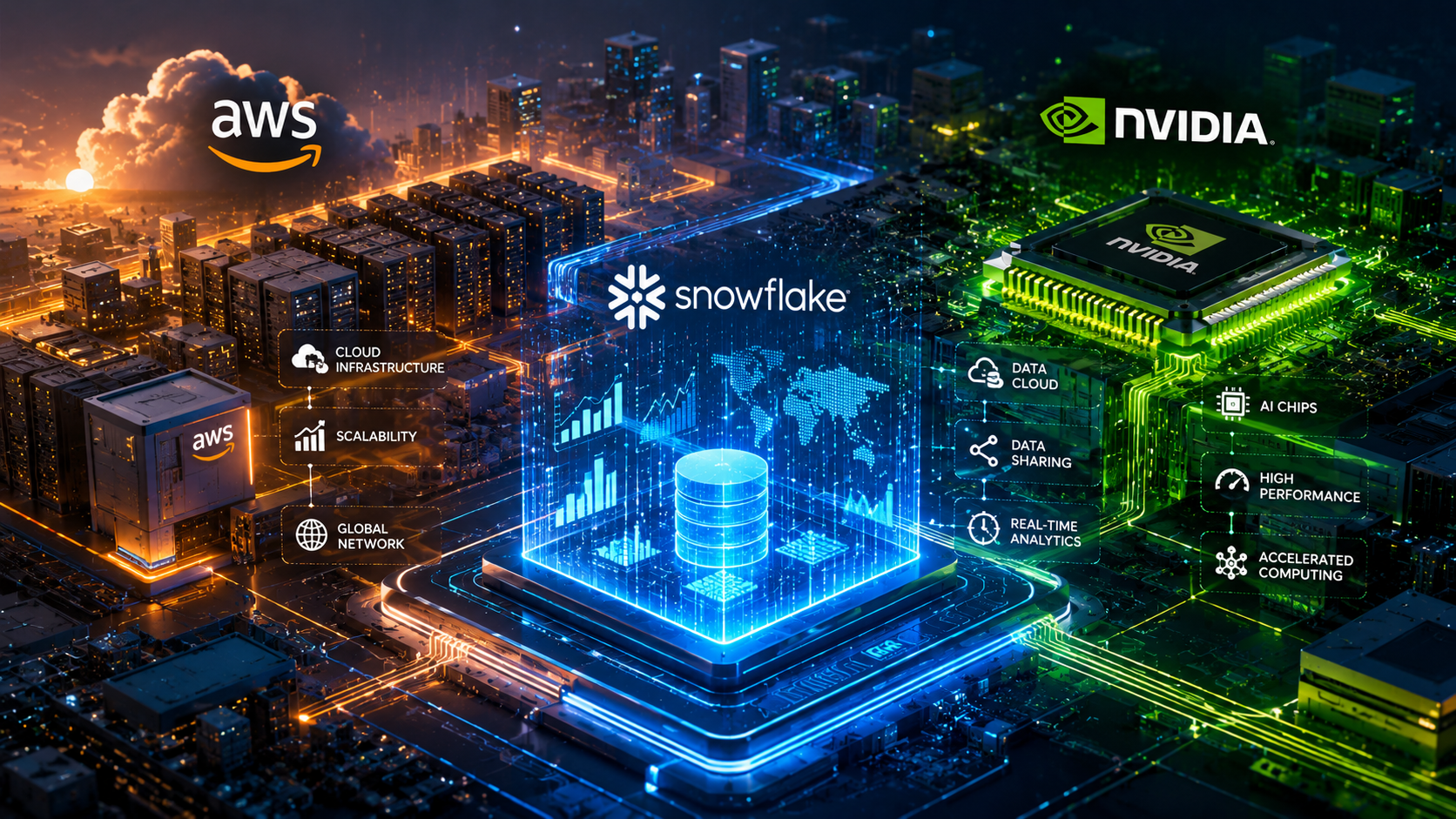
Artificial intelligence is transforming the global technology industry faster than any previous digital revolution. Behind every advanced AI model, chatbot, recommendation engine, and automated system lies a massive computational infrastructure powered by cloud computing. While consumers mostly see AI applications on the surface, the real battle is happening deep inside data centers where companies compete for processing power, storage capacity, and technological dominance.
Cloud computing has become the backbone of modern artificial intelligence because AI systems require enormous amounts of data and computational resources. Training large language models and operating AI services demand billions of calculations every second. Traditional computing systems are no longer enough to support these workloads, which is why companies increasingly depend on large-scale cloud providers such as Amazon Web Services, Microsoft Azure, and Google Cloud.
The relationship between artificial intelligence and cloud computing is now inseparable. AI models need scalable infrastructure capable of handling unpredictable workloads, high-speed processing, and global accessibility. Cloud platforms offer this flexibility by allowing companies to rent computational power instead of building their own expensive infrastructure from scratch.
As AI adoption grows across industries, demand for cloud services continues to increase rapidly. Businesses now use AI for customer support, cybersecurity, analytics, logistics, healthcare, marketing, and software development. Every new AI-driven application creates additional pressure on cloud providers to expand their infrastructure.
This competition has triggered what many analysts now call the “Cloud Wars.” Technology giants are investing billions of dollars into new data centers, advanced processors, and energy-efficient computing systems to secure long-term dominance in the AI economy.
At the center of this conflict is a simple reality: the companies controlling AI infrastructure may ultimately control the future digital economy itself.
Why Nvidia, AWS, and Snowflake Are Competing for AI Dominance

The AI infrastructure race is not limited to software companies alone. It also involves semiconductor manufacturers, cloud platforms, and enterprise data companies competing to become essential parts of the artificial intelligence ecosystem.
Nvidia currently holds one of the strongest positions in the market because its graphics processing units, or GPUs, have become the industry standard for training advanced AI models. Originally designed for gaming, Nvidia’s hardware is now powering some of the world’s most sophisticated artificial intelligence systems. The company’s rapid growth reflects how critical AI chips have become in the global technology economy.
However, Nvidia is no longer alone. Amazon Web Services has been developing its own AI-focused processors, including the Graviton chip series. These processors aim to reduce dependence on Nvidia while offering lower costs and improved efficiency for cloud customers. Amazon believes that owning its own hardware infrastructure gives it greater control over pricing and scalability.
Meanwhile, enterprise cloud data companies such as Snowflake are becoming increasingly important because AI systems depend heavily on access to structured and organized data. Snowflake’s partnership expansions with cloud providers demonstrate how businesses are preparing for an AI-driven future where data processing speed and storage capacity become critical competitive advantages.
The competition between these companies reflects a much larger technological transformation. Artificial intelligence is creating an entirely new computing economy where infrastructure matters just as much as software innovation.
AI chips have effectively become the “oil” of the digital age. Companies capable of designing faster, more efficient processors gain enormous influence over the future development of AI systems. This explains why Amazon, Google, Microsoft, and other major technology firms are aggressively building custom hardware solutions instead of relying entirely on external suppliers.
The scale of investment is unprecedented. Billions of dollars are flowing into semiconductor factories, cloud infrastructure projects, and AI research facilities worldwide. Governments are also becoming involved because advanced computing infrastructure is increasingly viewed as a matter of economic security and geopolitical power.
The cloud wars are therefore not just business competitions. They are shaping the future balance of technological influence across the world.
The Economic and Geopolitical Impact of AI Infrastructure
Artificial intelligence infrastructure is now influencing global politics, economics, and international competition. Countries recognize that AI leadership could determine future economic power, military capabilities, and technological independence.
The United States currently dominates much of the AI infrastructure market through companies like Nvidia, Amazon, Microsoft, and Google. However, other countries are investing heavily to reduce dependence on foreign technology providers. China, in particular, has accelerated efforts to develop domestic AI chips, cloud systems, and semiconductor manufacturing capabilities.
This growing competition has created new geopolitical tensions. Export restrictions on advanced semiconductor technology, trade disputes, and national security concerns are becoming increasingly common. Governments worry that losing access to critical AI infrastructure could weaken their economic competitiveness in the future.
At the same time, the environmental impact of AI infrastructure is becoming a major concern. Large AI data centers consume enormous amounts of electricity and water. As artificial intelligence usage expands globally, cloud providers face increasing pressure to build more sustainable infrastructure powered by renewable energy sources.
The economic opportunities, however, are massive. AI infrastructure development is generating new industries, attracting global investment, and creating high-paying jobs in engineering, cybersecurity, cloud architecture, and semiconductor manufacturing.
Companies are also realizing that AI infrastructure is no longer optional. Businesses unable to integrate AI systems may struggle to compete in increasingly automated markets. As a result, even traditional industries are investing in cloud services and AI technologies to remain competitive.
This transformation is reshaping the global economy at every level. Artificial intelligence infrastructure is becoming as essential to modern civilization as electricity networks or internet connectivity.
The long-term consequences could be enormous. Future technological leadership may depend less on consumer products and more on who controls the computational systems powering artificial intelligence itself.
The Author’s Perspective on the Future of AI Infrastructure

In my opinion, the AI infrastructure race represents one of the most important technological shifts of the twenty-first century. Most people focus on visible AI applications such as chatbots or image generators, but the real power lies beneath the surface in cloud systems, processors, and massive computational networks.
The companies building this infrastructure are not simply creating products; they are constructing the digital foundations of future society. Whoever controls AI infrastructure may influence communication, business, healthcare, education, finance, and even national security.
I believe the cloud wars will continue intensifying over the next decade. Demand for computational power is growing at an extraordinary pace, and no company wants to depend entirely on external providers for critical AI systems. This is why so many technology giants are investing aggressively in custom chips and global cloud expansion.
At the same time, society must carefully consider the risks associated with concentrated technological power. A small number of corporations now control a significant portion of global digital infrastructure. If AI becomes deeply integrated into daily life, this concentration of influence could raise serious concerns about competition, privacy, and economic inequality.
Environmental sustainability is another critical challenge. Artificial intelligence requires enormous energy consumption, and future infrastructure growth must balance innovation with responsible resource management.
Despite these concerns, AI infrastructure also offers tremendous opportunities. It can accelerate scientific discovery, improve healthcare systems, optimize transportation, and increase productivity across nearly every industry.
The future of artificial intelligence will not depend only on smarter algorithms. It will depend on the invisible infrastructure powering them. The cloud wars happening today are quietly shaping the technological future of humanity.